Abstract#
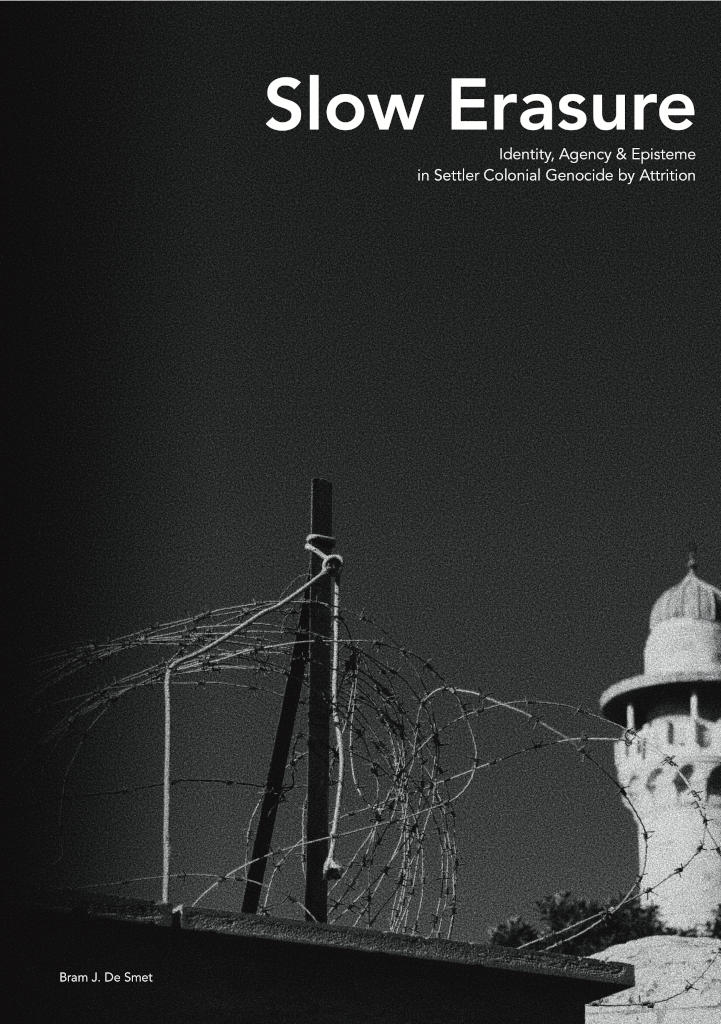
This PhD thesis introduces and develops the concept of slow erasure to describe the layered, structural, and ongoing processes through which settler-colonial regimes seek to eliminate Indigenous identity, agency, and episteme. Building on and expanding the frameworks of genocide by attrition and cultural genocide, slow erasure captures the accumulative and often invisible forms of violence that operate through spatial control, epistemic suppression, bodily harm, and bureaucratic governance. While the concept is broadly applicable to other settler-colonial contexts, this thesis grounds its analysis in the case of Palestine, examining how Israeli settler-colonialism systematically unmakes the conditions that sustain Palestinian presence, memory, and resistance.
The need for this concept arises from the insufficiency of dominant legal and scholarly frameworks to capture the diffuse, long-term nature of genocidal violence in settler-colonial contexts. Traditional definitions of genocide, rooted in physical extermination, fail to grasp the epistemic, cultural, and relational dimensions of erasure. By centring slow erasure, this work situates Palestinian experiences within a broader global pattern of settler-colonial genocide as a structure rather than an event. The thesis shows how settler-colonial regimes seek to dismantle the conditions that sustain Indigenous life, undermining cultural memory, severing ties to land and community, and erasing knowledge passed through generations. Through this framing, slow erasure emerges as both a theoretical tool and a political intervention, demanding that we reckon with genocidal violence in its less visible, yet no less devastating, forms.
Ethnographically grounded and theoretically engaged, this research traces how Israeli settler-colonial power manifests through policies of confinement, incarceration, surveillance, destruction of heritage, and the weaponisation of care and death. Yet the thesis does not only dwell in erasure; it foregrounds resistance. It examines how Palestinians resist slow erasure through sumud (steadfastness), expressed in both overt and subtle ways: in prison education, hunger strikes, the cultivation of land, the defence of religious spaces, and the preservation of culture. These acts are profound assertions of life, memory, and futurity. Resistance is not framed as reaction but as ongoing presence—relational, embodied, and epistemic—challenging the settler state’s efforts to disappear the Indigenous.
Ultimately, this thesis argues that slow erasure is not just a descriptive concept but an urgent analytic for peace research, genocide studies, and decolonial thought. It compels scholars and practitioners to attend to the quiet, bureaucratised, and systemic forms of violence that threaten Indigenous communities, not only in Palestine but globally. Recognising and naming slow erasure shifts the focus from moments of spectacular violence to structures of dispossession and survival, demanding an expanded moral and political vocabulary. In doing so, this work contributes to a broader call for solidarity, critical accountability, and a radical rethinking of what justice and liberation must entail in settler-colonial worlds.
Read#
Read the book online at https://slowerasure.phd
You can download the book from Tampere University (75MB).
Cite as#
De Smet, Bram J. 2025. SLOW ERASURE: Identity, Agency & Episteme in Settler Colonial-Genocide by Attrition. TAPRI Studies in Peace and Conflict Research 113. Tampere: Tampere Peace Research Institute.